How a Portable VR Training Simulator is Transforming Law Enforcement Training
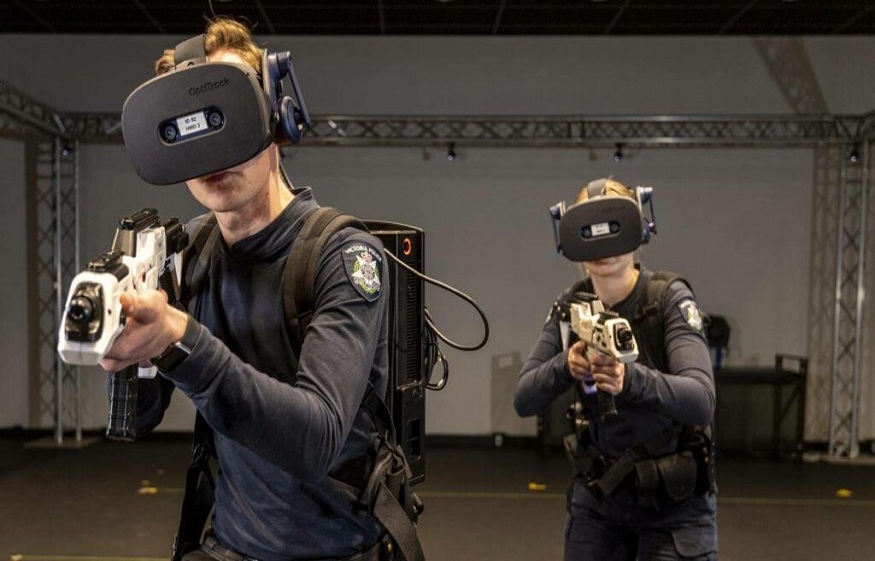
Law enforcement professionals regularly encounter situations that demand quick thinking, sound judgment, effective communication, and appropriate responses. Preparing officers for these unpredictable circumstances requires more than classroom instruction. While conventional drills remain useful, advancements in virtual reality are giving agencies another way to create realistic and engaging training experiences. A portable VR training simulator for law enforcement can provide officers with immersive scenario-based practice without requiring a large permanent training facility.
Use of portable VR training simulator for law enforcement training
Portable VR training simulator for law enforcement combines realistic digital environments with interactive technology to recreate situations officers may encounter in the field. Because the equipment can be transported and deployed in different locations, agencies can bring advanced training capabilities closer to their personnel. This flexibility makes VR simulation particularly useful for departments that need practical training options without extensive infrastructure.
Read More: Making Sense Of Daily Fluctuations In Yellow Metal Value
One of the biggest advantages of virtual reality training is its ability to place officers inside simulated situations. Instead of simply discussing how to respond to a particular incident, personnel can experience a scenario and make decisions as events unfold. A VR simulator can recreate environments such as streets, public buildings, residential areas, commercial properties, and other locations relevant to law enforcement activities. Scenarios can also introduce changing circumstances that require officers to continuously observe their surroundings and adjust their responses. This immersive approach can make training more engaging while helping personnel connect theoretical knowledge with practical decision-making.
Situational awareness is another essential skill for law enforcement professionals. Officers must remain attentive to their surroundings, recognize relevant details, and understand how a situation may develop. Virtual reality can recreate multiple elements simultaneously, allowing trainees to practice identifying important information within a dynamic environment. For example, a simulation may require an officer to monitor several people, recognize environmental factors, listen to communications, and respond to changing events. Because VR scenarios can be repeated, officers can revisit situations and focus on areas where additional practice may be beneficial.
Real-world training exercises can involve physical risks, particularly when they attempt to recreate complex or high-pressure incidents. VR provides a controlled alternative in which challenging scenarios can be practiced without physically reproducing every potential hazard. This does not mean virtual training replaces all hands-on exercises. Instead, it can complement existing programs by allowing personnel to build familiarity with different situations before participating in more physically demanding exercises. A controlled digital environment also gives instructors greater freedom to introduce challenging scenarios that may be difficult, expensive, or impractical to recreate repeatedly in a physical training facility.
Read More: The Science Of Youth: Why Choose Laser Skin Resurfacing?
Portability is one of the defining benefits of modern VR training technology. Traditional simulation facilities may require dedicated rooms, specialized infrastructure, and significant logistical planning. A portable system can offer greater flexibility because training equipment can be transported to different locations. This can be particularly useful when agencies have personnel working across multiple facilities or when regular access to a centralized training center is difficult. Training sessions can potentially be organized closer to officers, making it easier to incorporate simulation into ongoing professional development.